Google Enables Website Image Extraction By Default
Google's new PMax campaigns will use website photos by default from December, affecting ad creation. This change may impact advertisers' image usage and permissions.
Original reporting · searchenginewatch.com
Original: “New PMax campaigns can use your website photos by default from December”
Read “New PMax campaigns can use your website photos by default from December” at Search Engine Watch →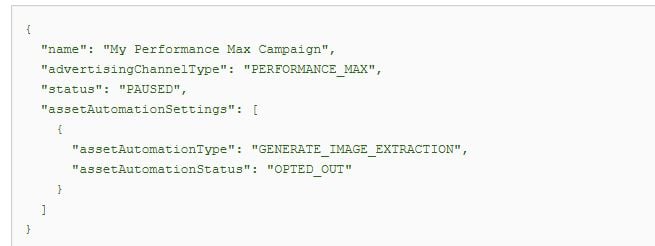
How this was written. Adtomix wrote this article with a language model from Search Engine Watch’s reporting (model: @cf/meta/llama-3.3-70b-instruct-fp8-fast); it describes that reporting rather than adding to it. The original, linked above, is the full story.
Key points from Search Engine Watch’s report
- Google's new PMax campaigns will enable website image extraction by default from December 4
- Existing Performance Max campaigns will retain their current settings
- Advertisers can opt out of image-extraction automation by setting the automation type to OPTED_OUT
- Updating an existing campaign requires careful consideration to avoid clearing separate automation settings
- Advertisers must review their website images to ensure they have necessary permissions for commercial and advertising use
Google announced a significant change to its Performance Max campaigns, according to Search Engine Watch. Starting December 4, new PMax campaigns will enable website image extraction by default, even if the option was previously switched off for the account. This change applies to campaigns created through the Google Ads interface, Ads Editor, and the API. Existing Performance Max campaigns will retain their current settings.
The current account setting will no longer determine the image-extraction choice for new campaigns. Instead, each campaign will have its own setting, which may require advertisers to review and update their campaign templates. Google's automation guide distinguishes image extraction from image enhancement, which can alter existing assets through cropping, animation, and other treatments.
For API-created campaigns, advertisers can explicitly opt out of image-extraction automation by setting the automation type to OPTED_OUT. This can be done once in the creation workflow, eliminating the need to remember each client's account setting. Agencies can also update their reusable templates to include this opt-out option.
Updating an existing campaign requires careful consideration, as the asset_automation_settings update replaces the entire list rather than merging individual entries. Advertisers must retrieve the current settings and retain the other entries they want to keep, or an image-related change could clear a separate automation setting. Google provides an audit query that returns campaign IDs, names, and automation settings to help with this process.
Advertisers must also review their website images to ensure they have the necessary permissions for commercial and advertising use. Google asks advertisers to confirm they hold rights for these uses, and teams with a separate approval process for ad creative must determine which landing-page photos have cleared it. This review is crucial before leaving extraction enabled, especially when the site team and media buyer maintain different asset lists.
Google's example campaign-creation request and campaign-settings audit query can help advertisers navigate these changes. By using these tools and reviewing their campaign templates and website images, advertisers can ensure a smooth transition to the new default setting. The change may require additional planning and coordination, but it can also streamline the ad creation process.
As the December 4 deadline approaches, advertisers should prepare for the change by reviewing their account settings, campaign templates, and website images. By taking these steps, they can ensure they are ready for the new default setting and avoid any potential issues with image usage and permissions.
Questions and answers
What happens to existing Performance Max campaigns?
Existing Performance Max campaigns will keep their current settings.
How can advertisers opt out of image-extraction automation?
Advertisers can explicitly set the image-extraction automation type to OPTED_OUT in their campaign template or API-created campaigns.
What should advertisers do to prepare for the change?
Advertisers should review their account settings, campaign templates, and website images to ensure they are ready for the new default setting and have necessary permissions for commercial and advertising use.